Breast cancer is one of the most common conditions seen in clinical practice. It does not present in a single way. Its development and course can vary depending on the type of tumour, how early it is detected, and individual factors. One point remains important throughout: when identified early, the options for treatment are broader and the outcomes are generally more favourable.
Several factors are known to influence risk. A genetic predisposition may be present, particularly when there is a family history of breast cancer. Other elements can also play a role, including smoking, alcohol consumption, and certain hormonal treatments. For example, hormone replacement therapy after menopause, or hormonal exposure during fertility treatments such as IVF, may be associated with a slight increase in risk. These factors do not mean that cancer will develop, but they can influence the overall risk level.
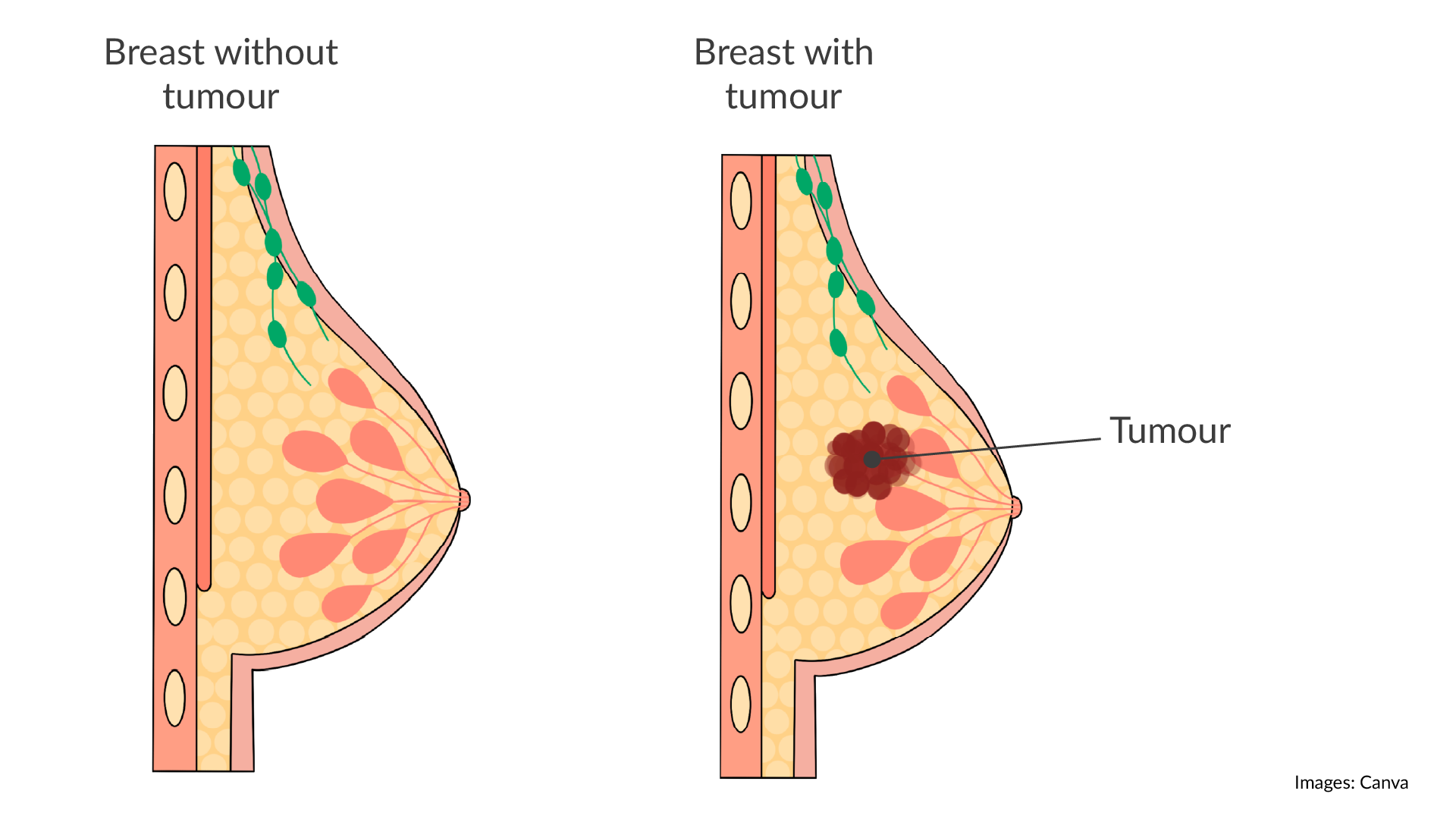
Healthy and tumour-affected breast tissue, shown side by side. Credit: Canva/ K Bernhard-Novotny
Regular follow-up helps to identify changes at an early stage. This includes routine screening, even when no symptoms are present, as well as consultation when something feels different. Being familiar with one’s own body, without unnecessary concern, can help to notice changes earlier.
Some signs should lead to medical advice. These include a lump in the breast or underarm, changes in the skin such as dimpling or redness, or changes of the nipple, including discharge. Most of these findings are not linked to cancer, but they should be assessed to understand their cause.
The first step is usually a clinical examination. This includes assessing the breast and the nearby lymph node areas. If needed, this can be complemented by imaging such as ultrasound or mammography. When there is a known family history, follow-up may begin earlier or be carried out more regularly.
Breast cancer includes different forms. Some are hormone-dependent, meaning their growth is influenced by hormonal signals. Others are identified at a very early stage. One example is ductal carcinoma in situ, or DCIS. In this situation, abnormal cells are confined within the milk ducts and have not spread into surrounding tissue. Although this form is not invasive, it is usually treated to reduce the risk of later progression.
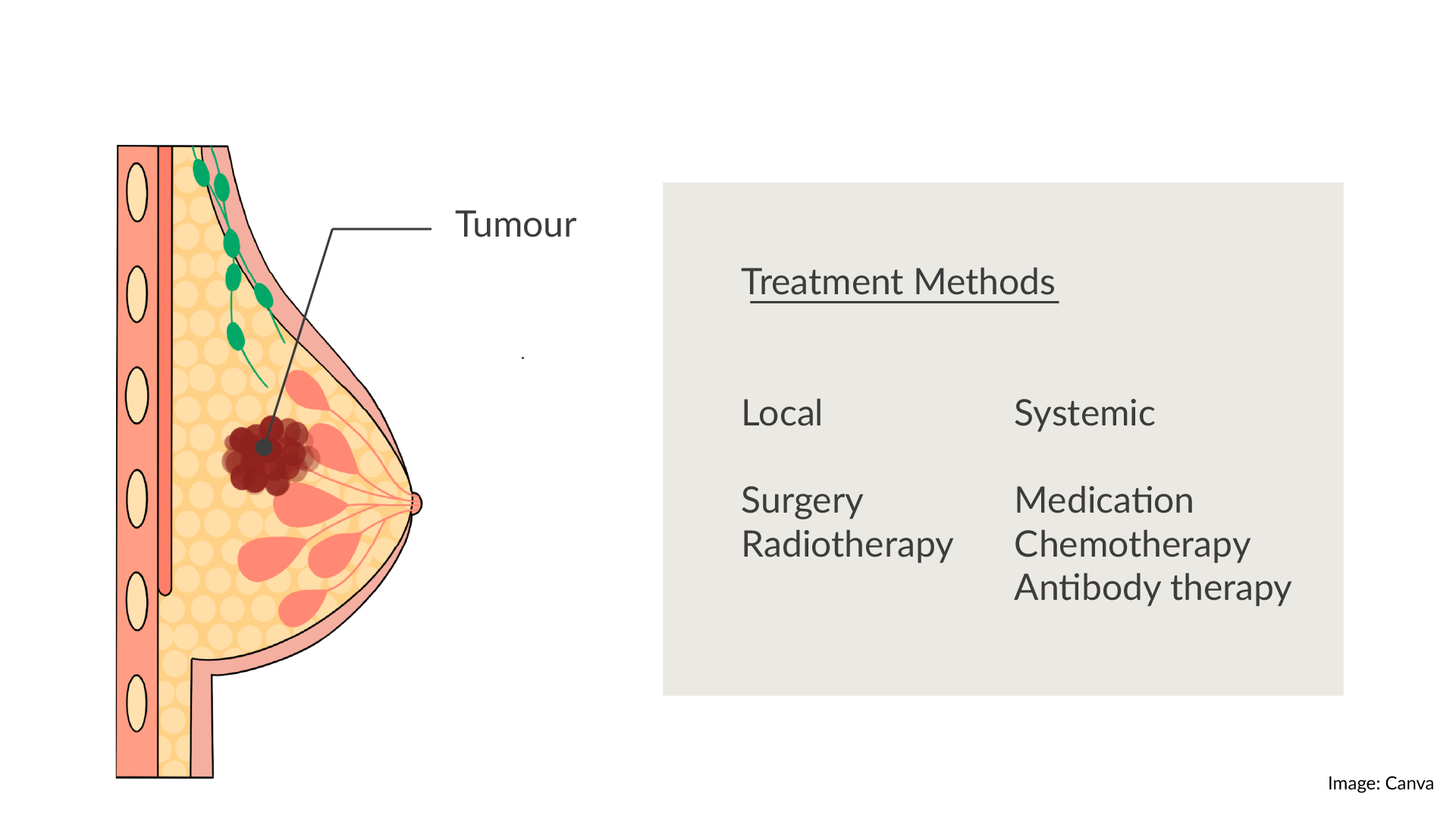
Breast cancer treatments, including local and systemic approaches. Credit: Canva/ K Bernahrd-Novotny
If a diagnosis is confirmed, treatment is planned in a coordinated way. Gynaecologists, oncology specialists and radiotherapists work together to determine the most appropriate approach. This allows the treatment to be adapted both to the characteristics of the tumour and to the individual situation.
Radiotherapy may be part of the treatment in certain cases. For example, after a diagnosis of DCIS, it can significantly reduce the risk of the condition returning. The decision to use it is always made on an individual basis.
Breast cancer develops differently in each person. Within this variability, regular monitoring and attention to changes remain essential. They make it possible to act at an earlier stage and to choose the most appropriate care with greater confidence.
Sources: